Solo Trips
Curated USPA A-License courses and progression camps.
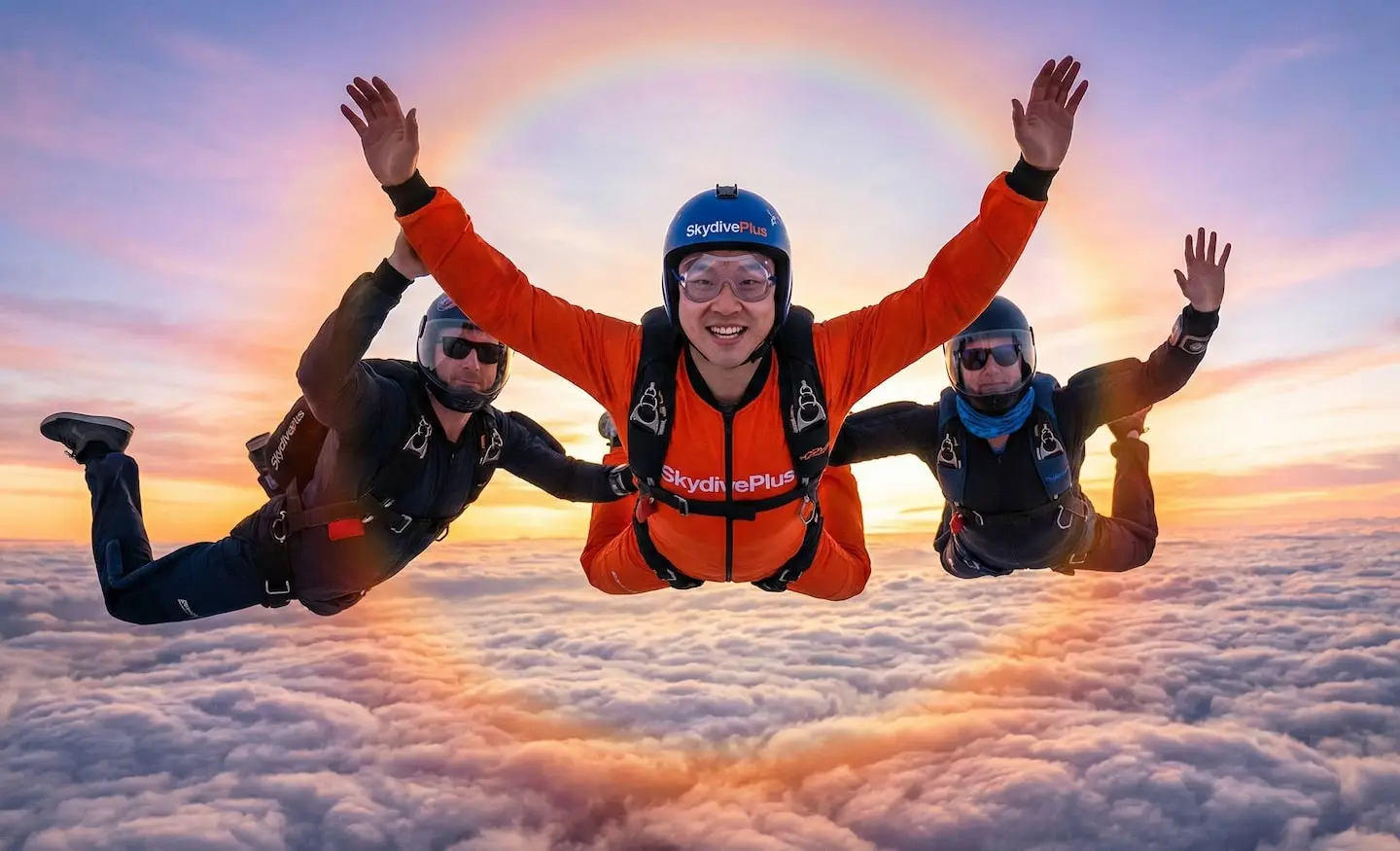
Solo Skydiving in Thailand
4 Students x 16 Days x USPA A-License
Complete your USPA A-License course in the sunny skies of Pattaya. Start from Malaysia with wind tunnel and ground school.
Mar 19 - Apr 4, 2026
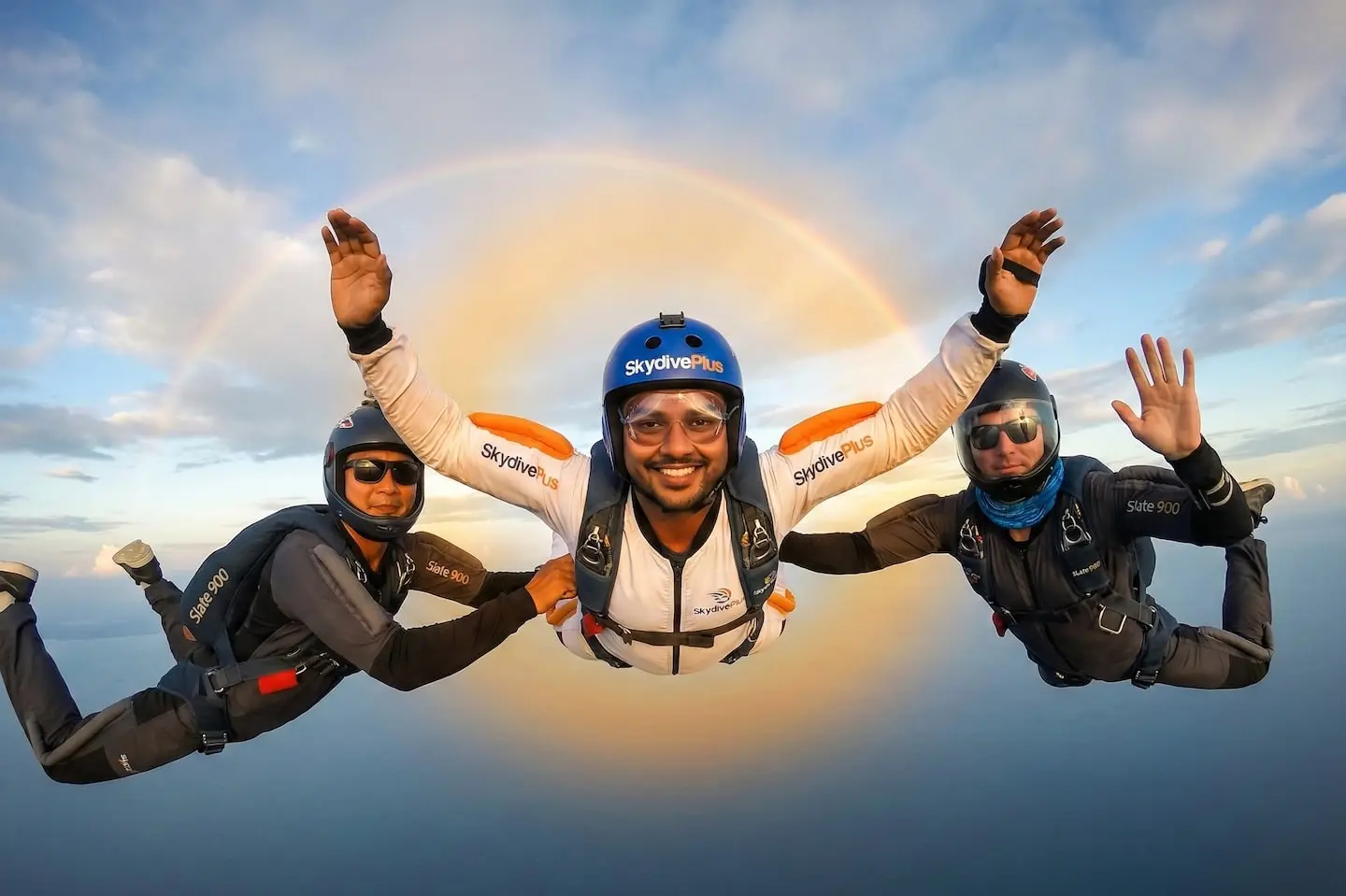
Solo Skydiving in Russia
6 Students x 22 Days x USPA A-License
Complete your USPA A-License course in the sunny skies of Krutitcy. Intensive training with specialized instructors.
Jul 4 - Aug 25, 2026
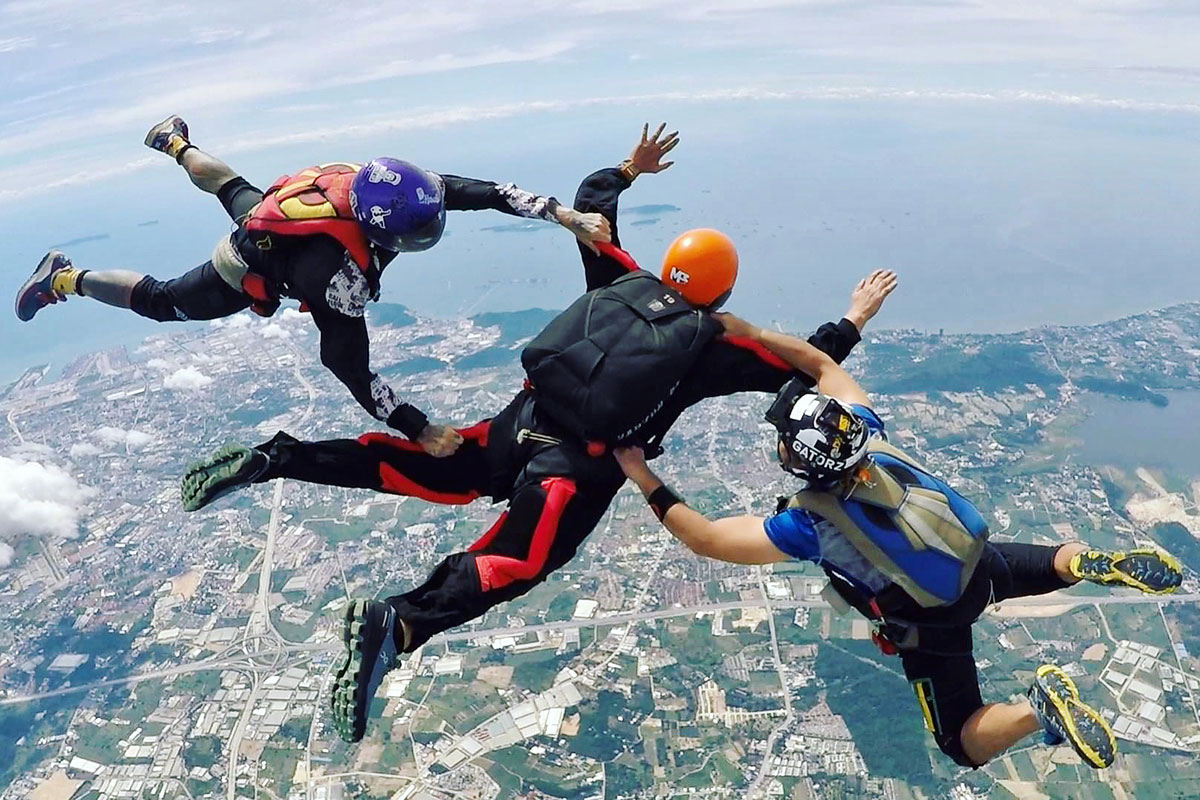
Solo Skydiving in Thailand
6 Students x 5 Days x AFF Level 1
Experience one tandem and one assisted solo jump. Complete your AFF Level 1 course in the skies of Pattaya. A rigorous bootcamp close to home.
Dec 5 - Dec 21, 2026
Wait — You Can Actually Skydive Solo?
Most Indians have heard of tandem skydiving — the experience where you're strapped to an instructor and jump together. It's incredible. But here's something most people don't realise: that tandem jump is not the only option. You can actually learn to skydive completely on your own. No instructor attached to you. Just you, the sky, and the freedom of freefall at 200 km/h.
This is called solo skydiving, and the first milestone on that journey is earning your USPA A License.
If you've ever watched a skydiver exit a plane and thought, "I could never do that on my own" — this guide is written for you. Because you absolutely can. Thousands of people from India already have. And the roadmap is clearer than you think.
Let's start from the very beginning.
01 What is the USPA, and why does it matter?
The United States Parachute Association (USPA) is the governing body for skydiving in the United States — and by extension, the most widely recognised skydiving authority in the world. It sets the safety standards, training guidelines, and license requirements that are respected at dropzones across more than 50 countries.
When you earn a USPA A License, you hold a qualification that is accepted at skydiving centres in Russia, Spain, Thailand, Dubai, the United States, Australia, and most of the world. It is the passport of the skydiving world.
India does not currently have widespread solo skydiving infrastructure of its own, which is why Indians who want to become licensed skydivers travel abroad to earn their certification — most commonly to Russia, Spain, Thailand, or Dubai.
The USPA issues four levels of license: A, B, C, and D. The A License is where every skydiver begins. It is the foundation, the gateway, and the first achievement that transforms you from a student into an independent skydiver.
02 What is the USPA A License?
The USPA A License is the entry-level solo skydiving certification. It proves that you have completed the required training, demonstrated fundamental freefall and canopy skills, and passed both a written exam and a practical check dive.
Once you hold this license, you are recognised as a safe, independent skydiver. Here is what it allows you to do:
- Skydive solo, without any instructor supervision
- Jump at any USPA-affiliated dropzone in the world
- Participate in group skydives (formation skydiving with other licensed jumpers)
- Pack your own main parachute
- Begin exploring skydiving disciplines like freeflying, canopy piloting, wingsuiting (later), and more
The A License also extends your "currency period" — the window of time you can go without jumping before needing recurrency training — from 30 days (student status) to 60 days. This matters for Indians who travel abroad to jump and then return home.
Most importantly, it is the beginning of a lifelong journey. The A License gives you the competency to jump safely. Every jump after it builds your skill, your confidence, and your love for the sport.
03 Requirements for the A License
1. Minimum of 25 Skydives
This includes all jumps made during the AFF program plus additional solo and coached jumps after AFF graduation.
2. Complete the AFF Program
The Accelerated Freefall (AFF) program — typically 7 to 8 levels — must be completed in full. This is the structured training course that takes you from complete beginner to solo jumper.
3. Five Group Freefall Skydives
You must complete at least five freefall jumps involving at least two participants (you plus at least one other licensed skydiver or coach).
4. Pass the Written Exam
A comprehensive written test covering skydiving theory, safety procedures, emergency protocols, weather, equipment, and regulations.
5. Pass the Oral Exam
Administered by a USPA instructor, this covers practical knowledge — gear checks, emergency procedures, canopy flight, and decision-making.
6. Complete the Check Dive (Practical Exam)
A skydive conducted with a USPA instructor who evaluates your freefall skills, stability, turns, altitude awareness, and canopy control.
7. Submit the Proficiency Card
This card is signed and stamped by your instructor upon completion of all required jumps and skills. It must be submitted to USPA within 60 days of the final validation.
04 The AFF Program — The Heart of Your Training
The Accelerated Freefall program, known as AFF, is the most widely used and globally respected method for teaching solo skydiving. With AFF, you experience genuine freefall from your very first jump.
The word "Accelerated" in the name refers to the accelerated learning curve — you progress faster because you are in the air with experienced instructors who guide you in real time.
Before the Jumps Begin: AFF Ground School
Before you ever set foot on a plane, you will attend AFF Ground School — also called the First Jump Course. This is a 4 to 8 hour classroom session where your instructor teaches you everything you need to know before your first jump.
- How skydiving equipment works (main parachute, reserve parachute, AAD)
- How to exit the aircraft
- Freefall body positioning — the "arch" position
- Altitude awareness — reading your altimeter
- How to deploy your parachute
- Canopy flight & Landing patterns
- Emergency procedures
- Hand signals used during freefall
The 7 Levels of AFF
LEVEL 1 — Your First Freefall
Two AFF instructors hold your harness throughout the freefall. You'll focus on altitude awareness, body position, and deploying your parachute.
LEVEL 2 — Turns and Heading Control
Two instructors. Practice 90-degree turns and flying on a heading without holding onto an instructor.
LEVEL 3 — First Release
Two instructors. They physically release you during freefall — for the first time, you fly alone while they remain close by.
LEVEL 4 — Unassisted Turns
One instructor. Complete turns without physical assistance.
LEVEL 5 — Unassisted Aircraft Exit
One instructor. Exit the aircraft completely unassisted.
LEVEL 6 — Destabilisation and Recovery
One instructor. Learn to regain stable position after intentional rolls or destabilisation.
LEVEL 7 — The Qualifying Jump
One instructor. Demonstrate all learned skills in a single jump unassisted. This is the AFF graduation jump!
After AFF: Coach Jumps
Graduating AFF means you have completed the supervised portion. To reach 25 jumps for your A License, you'll complete Coach Jumps (refining skills with a USPA Coach) and Solo Consolidation Jumps (practicing independently). This phase is where many say skydiving truly becomes joyful.
05 The Role of Wind Tunnel Training
One of the most valuable tools in a new skydiver's training kit is an indoor vertical wind tunnel. It simulates the freefall environment with stunning accuracy.
In a real skydive, you get approximately 60 seconds of freefall. In a wind tunnel, a single 4-minute session gives you the equivalent freefall time of four skydives. You can practise specific movements repeatedly which is impossible in the sky.
15 minutes of wind tunnel time is widely considered equivalent to the freefall time of roughly 15 skydives. This dramatically reduces the number of repeat jumps needed during AFF, saving you both time and money.
Wind Tunnel Access By Destination
Located walking distance from the dropzone. 30 mins often included in packages.
No tunnel included. Nearest facility is ~500km away.
No tunnel available in-country (nearest in Malaysia).
Available on-site, but not included and significantly more expensive.
06 Cost Breakdown for Indians
Earning a USPA A License is an investment. Here is a clear picture of what to expect at each destination (all figures in INR, approximate).
Total Cost to Earn USPA A License (All-in)
(Includes 25 jumps, flights, stay, food, visa)
*These are estimates. Actual costs vary based on season, exchange rates, and personal spending.
07 Choosing Your Destination
Russia (Krutitcy)
Strongest points: Lowest overall cost, wind tunnel included, low repeat jump costs, strong safety culture.
"If budget is a primary factor: Russia is the clear choice."
Spain (SkydiveSpain)
Strongest points: World-class training, English widely spoken, excellent safety reputation.
"If you prioritise English-language instruction and a premium training environment: Spain is excellent."
Thailand
Good for combining training with holiday. Watch out for high jump costs.
08 After the A License
Earning your A License is not the end — it is the beginning. After your A License, you can pursue:
- B License (50 jumps): Night jumps, HALO jumps, balloon jumps.
- C License (200 jumps): Wingsuit training, instructor ratings.
- Disciplines: Freeflying, Canopy piloting, formation skydiving.
09 Common Questions
10 Your Next Steps
- Decide on Destination: Russia for value, Spain for premium.
- Research Dropzone: Look for USPA Group Member status.
- Sort Logistics: Visa, flights, stay.
- Right Mindset: Trust the process, embrace the community.
- JUMP: One decision at a time.
"And then one day soon — you will be a licensed skydiver. Blue skies."
This guide was written for SkydiverShweta.com. For personalised guidance, reach out on Instagram: @SkydiverShweta